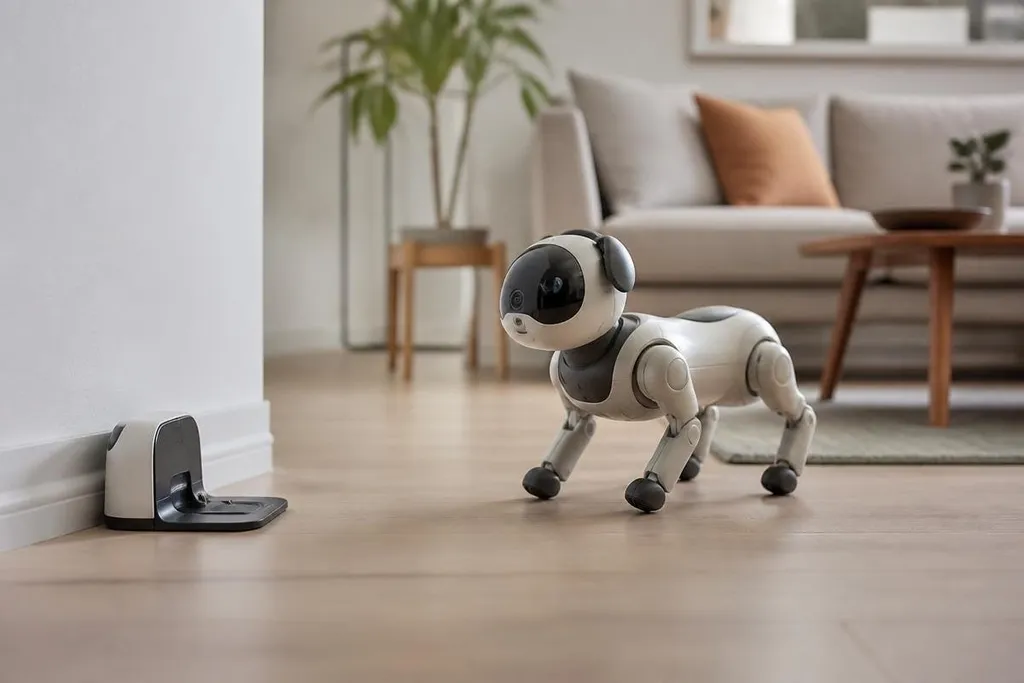
A robot pet can walk, react to touch, and return to a charging dock. The harder task is making it useful at home without turning it into another screen with legs. For buyers, the future will depend on battery life, safe movement, repair costs, and what the robot can do after the first week.
- Movement will matter less than safe movement around people and furniture.
- Voice and touch controls will need to work without constant internet access.
- The price will include charging, repairs, software, and replacement parts.
The first job is simple movement
Robot pets need motors, cameras, microphones, and touch sensors to move through a room and respond to people. Those parts let a robot avoid a chair, react when someone touches its head, or return to a dock when its battery runs low.
That sounds close to a living pet, but the machine follows programmed rules. A sensor can detect contact; it can't understand why a child touched it. Safe behavior will need limits on speed, force, and where the robot can go.
A small robot may work well on a flat floor and still struggle with rugs, steps, loose cables, or wet surfaces. Those details matter because homes aren't test labs. A robot that needs a clear path will spend much of its time waiting for one.
The useful part will happen between the tricks
Robot pets will need a reason to stay in the home after the novelty fades. That reason could be simple: the robot checks a room, responds to a call, reminds someone about a task, or gives an older person an easy way to contact family.
Each job adds hardware and software demands.
Room checks need a camera and a way to process images. Object handling needs a gripper, balance control, and a clear limit on payload. Voice control needs microphones, speakers, and software that can handle interruptions.
The strongest products will keep these jobs narrow. Trying to do everything may require more sensors, more battery power, and more updates. More parts also mean more things that can fail.
Privacy terms can change the value of a robot pet as much as its battery life. Robot24.com's reporting on home robots can tie camera and cloud-data claims to a named maker and model before you compare the daily cost.
Privacy will shape the home robot
A robot pet may spend hours carrying cameras and microphones through private rooms. That creates a clear question: where does the recorded data go, and how long does the company keep it?
Buyers should look for local processing, a physical camera shutter, a microphone mute switch, and clear data controls. These features don't remove every risk, but they give people a way to stop recording without opening an app.
Internet access brings another limit. If a robot needs a remote server for voice commands or image processing, a service outage can remove part of its function. Local controls should cover basic movement, docking, and emergency stop actions.
The business model may decide the result
The purchase price tells only part of the story. Robot pets may also need a subscription for voice features, cloud storage, or new software. Batteries lose capacity over time, and moving parts may need service.
That cost changes the buyer's choice. A toy can be worth buying if it works offline and stays useful without paid software. A home assistant needs a longer service plan because the owner depends on it for a daily task.
I’d skip any robot pet that hides its repair plan or stops basic functions when a subscription ends.
A practical buying check
Before you spend money, check these points:
- Test the floor: confirm which rugs, thresholds, and surfaces it can cross.
- Check the battery: find the stated runtime, charge time, and battery price.
- Find the stop control: make sure a person can stop movement without an app.
- Read the data rules: look for local processing, storage limits, and deletion tools.
- Price the second year: add subscriptions, shipping, repairs, and replacement parts.
The next useful robot pet won't need to imitate an animal perfectly. It will need to move safely, work when the internet fails, protect the home's data, and still do one useful job after the novelty is gone.